



Frequently Asked Questions
Planning a Tanzania safari raises a lot of questions, and we’ve heard most of them. Below, our team answers what travelers ask most often, from visas and packing lists to safety, payments, and what makes our safaris different. Browse by topic to find what you need.
Browse by Topic
Prepare Your Trip
Visa Tanzania
Once your safari or Zanzibar holiday is booked, the next step is sorting out your tourist visa. Most travelers find the process easier than expected. You can apply either online before departure or on arrival at the airport.
Pricing depends on your nationality. Travelers from Europe generally pay 50 USD. US citizens need a multi-entry visa, priced at 100 USD. Both types stay valid for three months, though the multi-entry option lets you leave and re-enter within a full year.
These rates apply to online applications. On arrival, you can pay 50 USD or 50 EUR for a standard visa, or 100 USD for multi-entry, in cash or by card. Card payments carry an additional processing fee.
The Tanzanian government favors online applications, and there are real benefits. The process moves quickly, your visa gets confirmed before you fly, and you only wait at one counter on arrival instead of three.
Apply only through the official government portal. Third-party sites often charge more, and some are outright scams. Stick to the verified portal to protect your money.
Our team guides every guest through the application process and stays available for questions along the way. Processing usually takes up to two weeks, so apply early and keep a printed or digital copy of your approved visa for travel.
Yes. The process takes a few more steps: fill out a form at the airport, apply at the visa counter, pay your fee at a second counter, then get your passport stamped at a third. It moves a little slower than the online route, since you’re queuing three times instead of one, but it remains a reliable backup option.
Most travelers prefer applying online, since it removes any uncertainty before departure. If you go this route, apply three to four weeks ahead in case of errors, have a credit card or bank transfer ready, and prepare a digital passport photo, a scan of your passport, and a PDF of your flight itinerary. Your passport must stay valid for six months past your return date.
If a child is traveling with only one parent, you’ll need a signed consent letter in English from the other parent, uploaded during the application.
Prefer applying on arrival? Bring cash or a card for the fee, a pen for the paper form, and the same parental consent letter if applicable. No photo is required for this method.
Note that some nationalities require a Referral Visa and cannot apply on arrival, so it’s worth confirming your specific requirements on the official immigration site before you travel.
Read our detailed guide about the Tanzania visa
Travel Insurance
Yes, and we consider it essential. A safari takes you into remote areas where medical facilities can be hours away, so comprehensive coverage matters more here than on a typical holiday.
Look for a plan built around adventure and remote travel, not a generic beach-holiday policy. Good coverage includes emergency medical evacuation, hospitalization, trip cancellation or interruption, and 24/7 support you can reach from anywhere on your itinerary. Talk to your travel consultant before booking so we can flag any gaps in your specific policy.
Yes. Since October 2024, every visitor to Zanzibar must obtain Zanzibar’s own mandatory travel insurance, separate from any policy you already hold. Apply in advance, pay 44 USD per person, and you’ll receive a QR code to show on arrival. Coverage includes emergency medical costs, repatriation, personal accidents, and baggage issues. Apply directly through Zanzibar’s official visitor portal.
We recommend it, especially for longer trips. Some policies only refund part of your cost if you cancel, so check the details with your insurer before booking.
Vaccinations
Beyond routine vaccines like MMR and tetanus, health authorities generally recommend Hepatitis A, Hepatitis B, and typhoid vaccines for travel to Tanzania. Yellow fever and rabies vaccines may also be recommended depending on your planned activities. For full detail on yellow fever specifically, see our guide on Tanzania yellow fever requirements.
What to Bring
Whether it’s your first safari or your fifth, a solid packing list makes everything smoother. Here’s what our team recommends.
Travel documents
Bring your passport (valid at least six months beyond your trip), your flight tickets, your visa or proof of e-visa application, and your travel insurance policy. Keep digital backups of everything in case originals go missing.
Money
Carry a mix of cash and cards. While dollars and euros are accepted in tourist areas, the Tanzanian shilling is the official currency and works best for smaller purchases.
Clothing
Tanzania’s weather varies by season and region, so pack in layers. Dry season travel (roughly January to February and June to October) rarely brings rain, but a light jacket is still worth packing. Wet season trips call for warmer layers and something waterproof. Across both seasons, pack neutral-colored, breathable clothing: long-sleeved shirts, trousers, shorts, a warm sweater, and a swimsuit if your trip includes a beach stop.
Footwear
Comfortable, sturdy shoes matter, especially if a walking safari is part of your itinerary. Pack sneakers for everyday wear, hiking boots if you’re walking rough terrain, and sandals if you’re heading to the coast afterward.
Medical kit
A basic first aid kit goes a long way: pain relievers, anti-diarrheal medication, antimalarials if prescribed, bandages, antiseptic cream, and hand sanitizer.
Toiletries and sun protection
Bring your usual toiletries plus a strong insect repellent, sunscreen, and after-sun lotion. Tanzania’s sun is intense, even on cloudy days.
Electronics
A camera, spare batteries, extra memory cards, and chargers are essentials. A universal plug adapter and binoculars round things out nicely. If you’re traveling in the wet season, pack a waterproof pouch to protect your gear.
Bags
Duffel bags pack more efficiently into safari vehicles than hard-shell suitcases. A daypack and a few ziplock bags for smaller items round out your kit.
What to Wear
Good news: most of what you need is probably already in your closet. Pack loose, breathable, easy-to-wash clothing in neutral or khaki tones, since dark colors like navy and black tend to attract tsetse flies.
Layering matters, since early morning game drives run cool while afternoons warm up fast. A wide-brimmed hat, sunglasses, and insect repellent round out the essentials, along with long sleeves and trousers for dusk hours when mosquitoes become more active.
Quick packing checklist:
- T-shirts and tank tops
- Long-sleeved shirts
- Shorts and light trousers
- A warm fleece or jacket
- Swimsuit
- Comfortable walking shoes and sandals
- Wide-brimmed hat and sunglasses
Beyond the beach resorts, especially in Stone Town, dress modestly. Knee-length shorts or skirts and covered shoulders are appropriate for both men and women. Beachwear is fine at the resorts themselves.
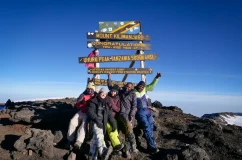
That trip needs its own separate packing list, since summit conditions demand serious cold-weather gear. Ask our team for a dedicated Kilimanjaro checklist once your climb is booked.
Flights
We can assist with international flight bookings, though these sit outside your safari package price and get arranged based on your dates, departure airport, and airline preference. All domestic flights within Tanzania, by contrast, are included in your safari package and arranged for you automatically. If you need help finding good international options, just ask.
General Info on Tanzania
The Tanzanian shilling is the official currency. Dollars and euros are widely accepted in tourist areas, but shillings work best for everyday purchases.
Tanzania is home to over 100 languages, though Swahili and English serve as the two official ones. Nearly everyone speaks Swahili, while English dominates the tourism sector. Our guides and staff communicate comfortably in English, and learning a few Swahili phrases beforehand tends to go over well with locals.
Close to 60 million. Tanzania ranks among Africa’s most ethnically diverse nations, home to roughly 120 different ethnic groups. Tanzanians are known for their warmth toward visitors, and many travelers count their interactions with locals among their trip’s highlights.
Tanzania runs on East Africa Time, three hours ahead of GMT, with no seasonal clock changes. That puts it 7 hours ahead of New York, 3 hours ahead of London, and 10 hours behind Los Angeles.
Our Safaris
Private Safaris
Yes, by default. You get a private vehicle and a dedicated guide for the full trip, unless you specifically choose a small-group departure.
Absolutely. Route, pace, accommodations, and activities are all adjustable to fit your interests and budget.
Very much so. The flexibility of a private safari suits couples, families with kids, and anyone who wants a more personal pace. Planning a romantic getaway? Take a look at our Tanzania honeymoon safaris.
Group Safari
We keep group sizes small, generally a handful of travelers per vehicle, to keep the experience personal rather than crowded.
Yes, solo travelers are welcome and often end up being some of the most engaged people on the trip.
Yes, group departures run on set dates to keep logistics smooth for everyone joining.
Accommodation, meals, park fees, guided game drives, and transportation throughout the trip are all included.
Accommodations
Our range spans comfortable mid-range lodges through high-end luxury camps, so you can pick a style that matches your budget and taste.
Our team personally visits and checks properties on a regular basis to keep quality and service consistent across our network.
Food
A mix of international dishes and Tanzanian classics: grilled meats, vegetable stews, rice dishes, chapati, and fresh tropical fruit. Traditional Tanzanian cuisine includes ugali, nyama choma, and pilau rice, while Zanzibar’s food leans heavily on coconut, cardamom, and fresh seafood.
Yes, vegetarian, vegan, gluten-free, halal, and other dietary requirements are easy to arrange with advance notice.
Yes. We work only with accommodations that meet high hygiene standards, and meals are prepared fresh in well-maintained kitchens throughout your trip.
Guides
Our guides are Tanzanian professionals with deep knowledge of the parks, wildlife behavior, and tracking. Many are multilingual, and we do our best to match guests with a guide who speaks their language when possible.
Extensively. Training covers wildlife behavior, driving safety, and guest care, and it continues throughout their careers with us.
Transfers & Pickups
Yes, all airport pickups, hotel transfers, and transportation between destinations are arranged for you as part of your itinerary.
Always. A team member greets you on arrival and takes you directly to your first accommodation.
Extensions
Yes, popular add-ons include a Kilimanjaro climb, a beach stay in Zanzibar, or a visit to a neighboring country. Extensions can also be combined, for example finishing a Kilimanjaro trek with a few days on the coast.
Yes, accommodations, transfers, activities, and any regional flights are arranged for you, the same as your main safari.
When to Visit
Best Time to Visit
June through October and December through February tend to rate highest, thanks to dry weather, strong wildlife visibility, and the Great Migration in full swing during parts of that window. That said, March, April, May, and November have their own appeal too: lush green landscapes, active bird life, and noticeably fewer visitors.
The migration moves continuously between the Serengeti and Kenya’s Maasai Mara, so you can catch some part of it year-round. The exact location shifts by month, so our team can help you time your trip around the specific migration moment you want to witness.
Read our detailed guide about the best time to visit Tanzania
Tanzania Weather
Weather varies by region. Coastal areas run hot and humid, the northern highlands stay cooler, and temperatures generally range from 22 to 31°C during the day, dropping to 10-22°C at night. Zanzibar keeps a warm, tropical climate year round.
Two: wet and dry. Short rains fall from late October through December, and long rains run from late March into early June. Afternoons bring the heaviest rain, typically clearing by morning.
Yes, and many travelers love it. The landscape turns green, wildlife stays active, temperatures cool down, and prices drop. A handful of lodges close and southern roads get rougher, but northern parks like Serengeti, Ngorongoro, and Tarangire stay fully open and running.
Rain draws animals together around fresh food and water, so game viewing often stays strong. Bird watchers in particular benefit, since migratory species arrive in large numbers during this stretch.
Read our detailed guide about Tanzania weather
Booking & Payments
Easy & Safe Payments
We offer flexible payment options to suit travelers from different countries, including bank transfer and major card payments. Ask your travel consultant for our current banking details and any card processing fees that apply, since these vary by payment method and region.
We take payment security seriously and maintain appropriate financial safeguards for our clients. Ask your consultant for details on our specific payment protection membership and certification.
Terms & Conditions
These are available on our Terms & Conditions page. We’re happy to answer any specific questions before you book.
Health & Safety
Yellow Fever
Tanzania itself carries a low risk for yellow fever, so most travelers coming from Europe or North America won’t need the vaccine. Proof of vaccination is only required if you’re arriving from, or transiting for 12+ hours through, a country with known yellow fever risk. For full detail, see our dedicated Yellow Fever Requirements page.
Read our detailed guide about Tanzania yellow fever requirements
Flying Doctors
For added peace of mind in remote areas, we recommend AMREF Flying Doctors, an East African air ambulance service offering emergency evacuation to Nairobi. Full details, including coverage limits and Kilimanjaro-specific evacuation info, are on our Flying Doctors page.
Safety
Generally, yes. Tanzania welcomes over a million tourists a year and ranks among the safer destinations in East Africa. Traveling with an experienced guide, as you do with us, adds an extra layer of protection.
Use reliable transportation (we handle this for you throughout your trip), keep valuables secured, dress simply to avoid drawing attention, stay in well-traveled areas, and keep your phone charged and connected, either through international roaming or a local SIM.
The far south, near the Mozambique border, sees higher crime rates and isn’t near any major tourist attractions, so there’s little reason to visit. In Dar es Salaam, stay alert in busier areas, as petty crime rates run higher than in most tourist regions.
Read our detailed guide about Tanzania travel advice
Sustainability & Responsibility
Responsible Travel
We focus on measurable action: reducing single-use plastic through refillable bottle programs, cutting fuel consumption through smarter driving practices, planting trees to offset our footprint, and investing in fair wages and training for our Tanzanian staff. Full detail, including our latest sustainability figures, lives on our Responsible Travel page.
Certification Status
We hold Travelife Partner status, a globally recognized sustainability framework covering environmental protection, fair labor practices, and ethical supplier relationships. We’re actively working toward full certification through ongoing audits and internal reporting.
Community Training Initiatives
Yes. We invest in training and opportunities for people in the communities where we operate, supporting skill-building in hospitality and tourism for those who might not otherwise have access to it. Ask your consultant for more on our current community programs.
Our Company
About Us
We’re a Tanzania-based safari company built on local expertise and years of hands-on experience across the country’s parks and coastline. Every trip is designed around real knowledge of the terrain, the wildlife, and the people who call it home.
Offices
Our operations run from Tanzania, with local staff on the ground throughout your trip. Contact us directly for full office details and how to reach us.
Team
Our consultants and guides bring years of hands-on experience across Tanzania’s parks and lodges. Guides are trained extensively in wildlife behavior, safety, and guest care, and many speak multiple languages.
Yes. With staff on the ground in Tanzania, support is available throughout your journey, not just before you arrive.
Trust
Check our reviews on TripAdvisor, Google, and Facebook to hear directly from guests who’ve traveled with us.
Reach out by email, phone, or our website contact form. Our team responds quickly and is happy to help with anything from itinerary questions to last-minute trip support.
Still Have Questions?
Reach out by email, phone, or our website contact form. Our team responds quickly and is happy to help with anything from itinerary questions to last-minute trip support.