






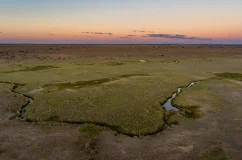
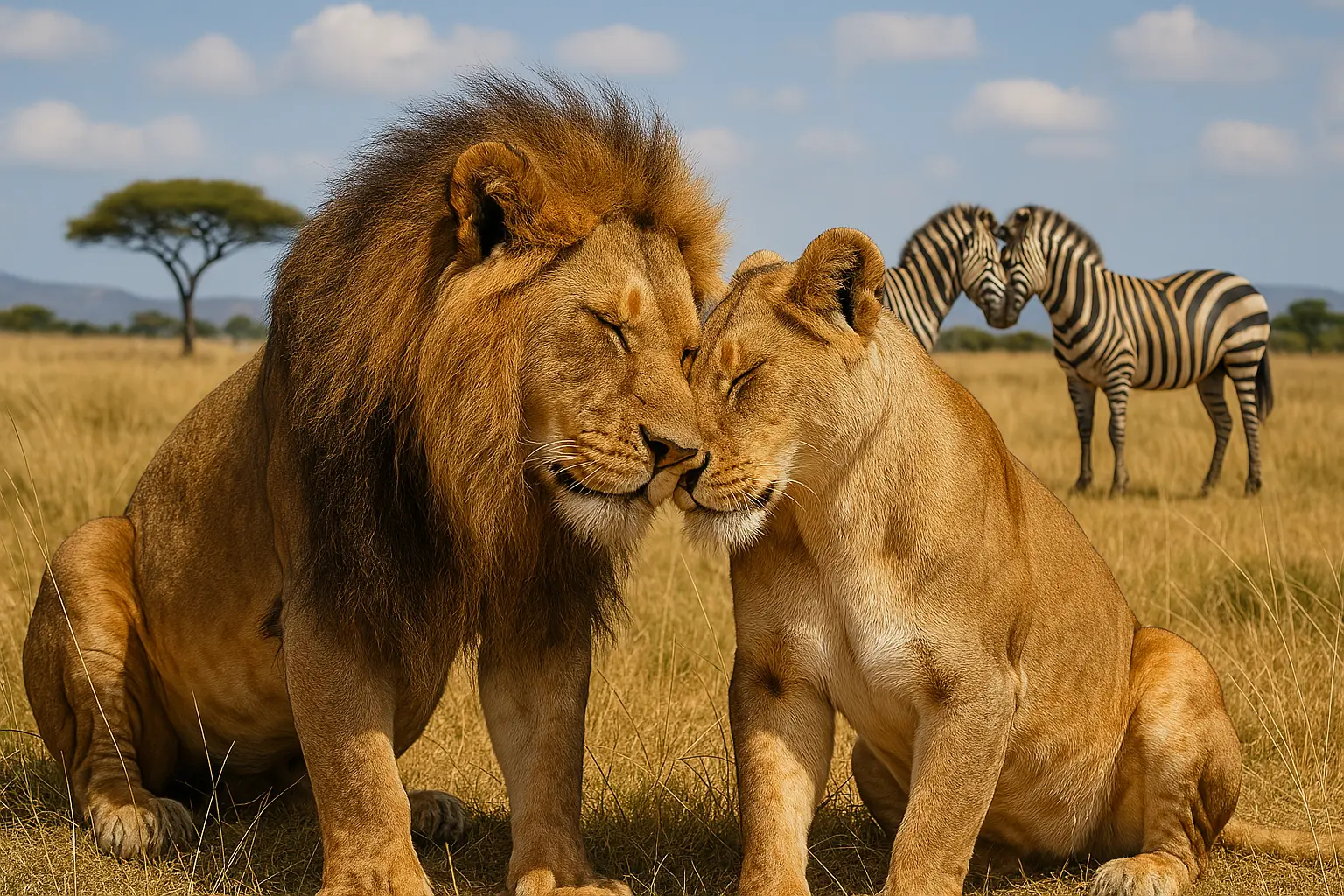
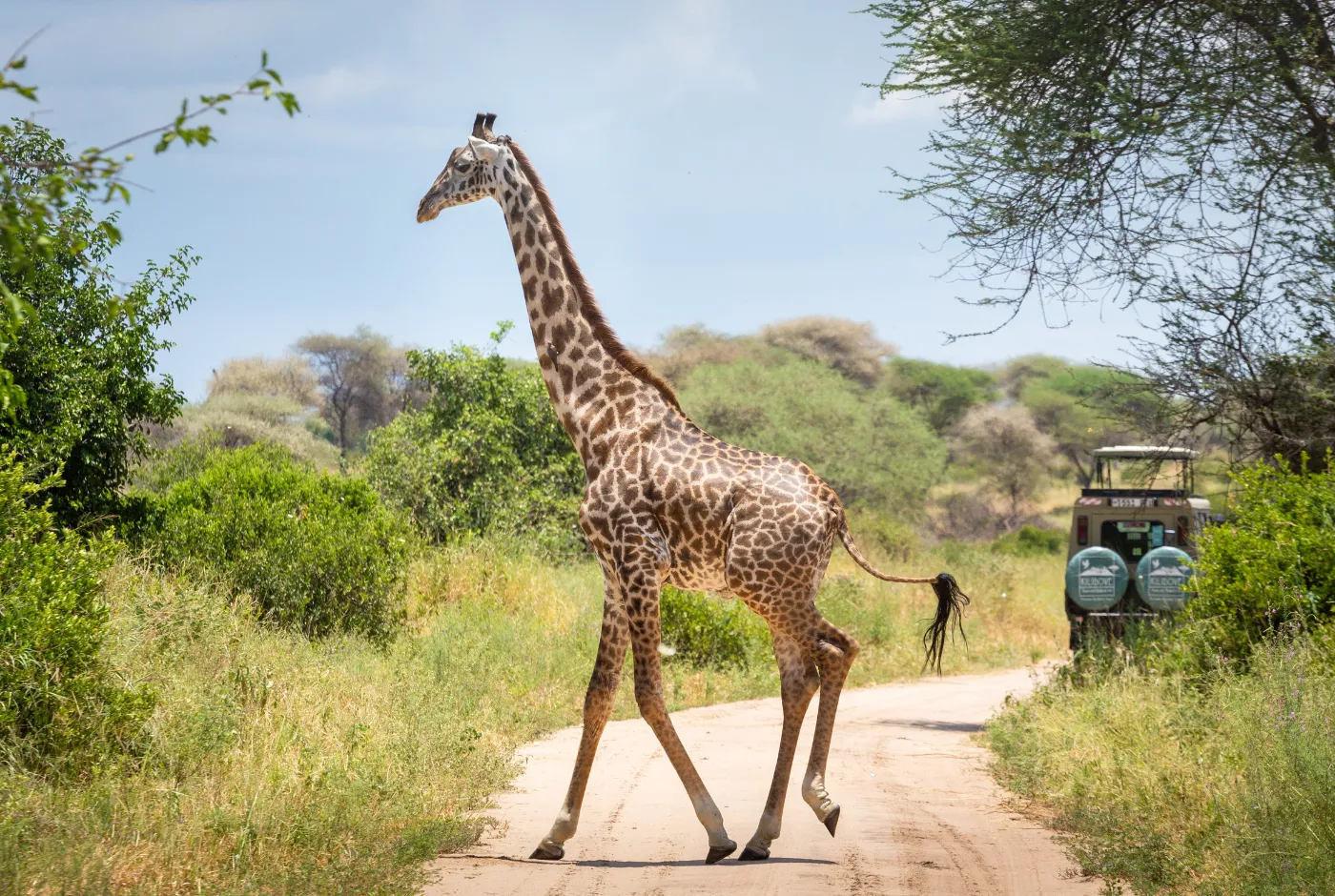
The best time to visit Tanzania is the dry season, which runs from late June to October. Wildlife viewing peaks in these months because animals gather around rivers and shrinking waterholes. However, the perfect months for your trip depend on your goals. Calving season, beach weather, Kilimanjaro climbs, and the Great Migration all follow different calendars. Our team at Kilidove Tours has planned safaris from Arusha for more than 15 years. We watch these seasons unfold outside our office window, every single year. In this guide, we cover every month, every region, and every major activity, so you can pick your dates with total confidence.
If migration viewing is your priority, read when to see the Great Migration.
In short, June to October suits most first-time visitors. Yet the green season rewards travelers who want lower rates, newborn wildlife, and quiet parks. Below, we break every option down in detail.
Understanding Tanzania Climate
Tanzania sits just south of the equator, so it has no summer or winter. Instead, rainfall and altitude shape the entire travel calendar. Broadly, the country splits into three climate zones.
The northern safari circuit sits on a high plateau, so days feel warm and nights feel cool. Arusha and the Ngorongoro Crater rim can drop close to 5°C (41°F) before dawn. Meanwhile, the coast and Zanzibar stay hot and humid all year, usually between 27°C and 32°C (81°F to 90°F). Finally, the southern and western parks feel hotter and drier than the north.
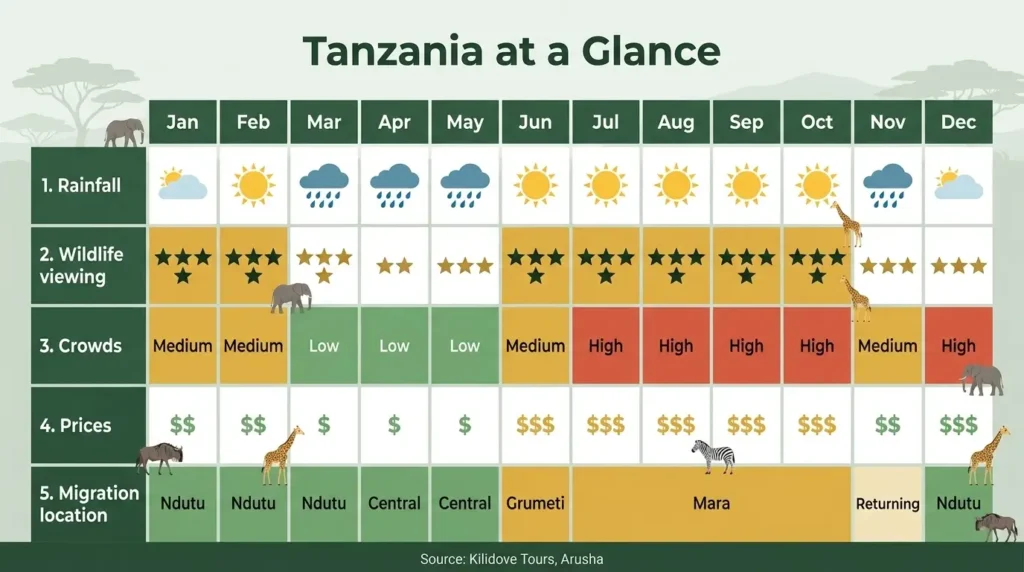
Two rainy periods interrupt the year. The short rains, called vuli, fall between November and mid-December. The long rains, called masika, run from mid-March through May. Everything else in this guide flows from that simple pattern.
The Dry Season (June to October)
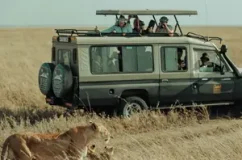
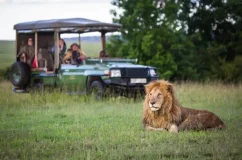
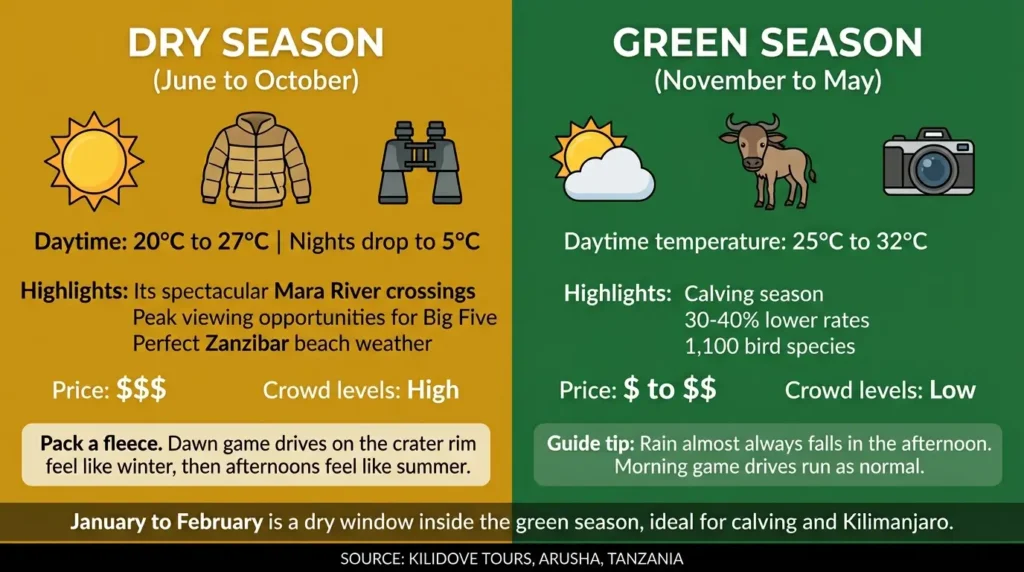
The dry season delivers sunny days, clear skies, and almost no rain. Grass turns short and golden, so animals become far easier to spot. Furthermore, wildlife concentrates around permanent water in Serengeti National Park, Tarangire, and the Ngorongoro Crater.
Daytime temperatures on the northern circuit sit between 20°C and 27°C (68°F to 80°F). June and July feel coolest, while October warms up before the first rains. Because conditions stay so reliable, this window is also the busiest and most expensive. Consequently, popular Serengeti camps sell out close to a year in advance.
If July is on your shortlist, read our detailed guide to visiting Tanzania in July.
The Green Season (November to May)
The green season covers both rainy periods plus a beautiful dry window in between. The short rains in November and December arrive mostly in the afternoon. They rarely disrupt a safari, and they turn the plains a deep green almost overnight.
Read what to consider when planning a safari during the rainy season.
January and February then bring a warm, mostly dry stretch across northern Tanzania. This is calving season on the Ndutu Plains, and our guides consider it a highlight of the year. Afterward, the long rains take over from mid-March until late May. Some remote camps close during this period, and a few park roads become muddy.
Best Time to Visit Tanzania: Month by Month
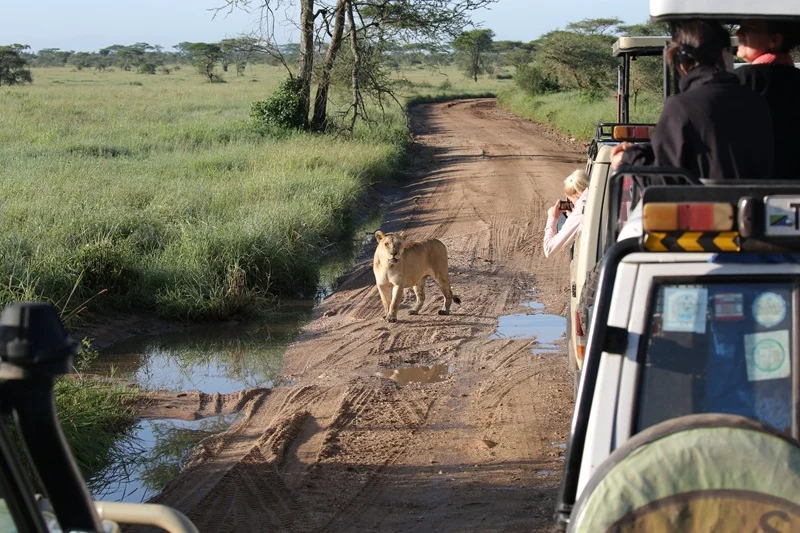
Every month here offers something different. Our guides drive these parks daily, so the notes below come straight from the field.
January
January opens with warm days and green plains after the short rains. The wildebeest herds mass on the Ndutu Plains in the southern Serengeti. By late month, calving begins and predator activity surges. Kilimanjaro trails stay dry, so climbing conditions rank among the best of the year. Zanzibar offers hot, sunny beach days with light breezes.
February
February is the heart of calving season, and around 8,000 calves arrive daily at the peak. Lions, cheetahs, and hyenas shadow the herds constantly, so dramatic sightings come fast. Additionally, this is one of the hottest months on the coast. Birding stays exceptional across the entire country. For photographers, February may be the single most rewarding month in Tanzania.
March
Early March still delivers fine weather and thinning crowds. The herds begin drifting north from Ndutu as the grass shortens. Then, around the middle of the month, the long rains arrive. Rates fall quickly, and lodges open their lowest seasonal pricing. Travelers who accept some rain find real bargains in late March.
April
April is the wettest month of the year across most of Tanzania. Some mobile camps close, and the southern parks become hard to reach. Even so, Serengeti, Ngorongoro, and Tarangire remain open and rewarding. Resident wildlife does not leave when the rain falls. You will often watch a lion sighting with no other vehicle in view.
May
Heavy rain continues into early May, then gradually eases toward month end. The landscape looks its greenest, and waterfalls run full in the highlands. Late May offers a smart compromise, with improving weather and pre-season prices. Moreover, the migration begins gathering for its push toward the Western Corridor. Photographers love the storm light and washed, dust-free air.
June
June marks the start of the main safari season. Skies clear, humidity drops, and mornings turn crisp on the northern plateau. The herds move through the Western Corridor toward the Grumeti River. Zanzibar enters its finest stretch of beach weather. Book June for peak-season conditions at slightly gentler prices than July or August.
July
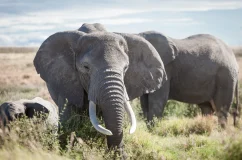
July sits at the absolute peak of the safari calendar. The first wildebeest columns reach the Mara River in the northern Serengeti. Meanwhile, Tarangire fills with elephant herds along its shrinking river. Days stay dry and mild, though dawn game drives feel genuinely cold. Demand tops out this month, so early booking is essential.
August
August continues everything July started, with river crossings at full intensity. Thousands of wildebeest plunge past waiting crocodiles in minutes of chaos. Families also travel heavily this month because of school holidays. Therefore, private vehicles and quieter camps make a real difference now. Our drivers position guests at crossing points before the crowds arrive.
September
September might be the connoisseur’s month. Crossings still occur in the northern Serengeti, yet August crowds begin thinning. The weather stays dry, warm, and stable across the whole country. Chimpanzee trekking in Mahale reaches its best conditions. If you want peak wildlife with slightly more breathing room, choose September.
October
October stays dry for most of the month, and temperatures climb steadily. Wildlife viewing remains outstanding as water grows scarcer than ever. Tarangire, in particular, delivers some of its densest game concentrations now. Late in the month, the first storm clouds build on the horizon. Shoulder-season rates begin appearing at many lodges.
November
The short rains arrive, and the plains turn green within days. The herds sweep back south toward Ndutu, moving quickly between showers. Crowds vanish, prices drop, and migratory birds pour in from Europe and Asia. Whale shark season also opens at Mafia Island on the coast. November remains one of the most underrated months for a safari here.
December
Early December stays quiet, with light rain and gentle shoulder pricing. Then the festive season transforms everything from mid-month onward. Lodges fill with holiday travelers, and rates jump to peak levels. The southern Serengeti fills with wildebeest settling in for calving. Christmas on safari followed by New Year in Zanzibar makes a superb combination.
Best time to visit Tanzania for a Great Migration
The Great Migration never stops moving, so you can find the herds year-round. Use this tracker to match your dates to the right camps.
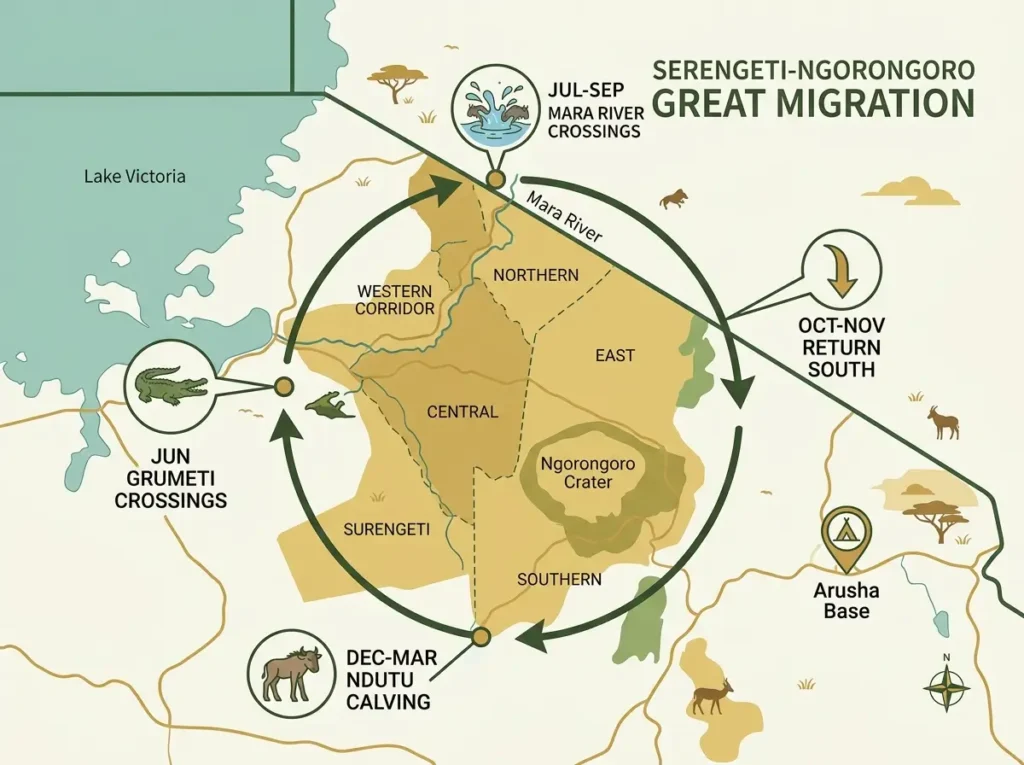
Our driver guides track herd movements daily through radio networks and local contacts. Accordingly, we position your camps around the animals, not around a fixed map. Explore our Tanzania safari itineraries to see how we build migration routes, or read our full Great Wildebeest Migration guide.
Best Time to Visit Tanzania by Region
Timing changes depending on which part of the country you explore. Here is how the circuits compare.
Northern Circuit: Serengeti, Ngorongoro, Tarangire, Lake Manyara
The northern circuit works well in every month of the year. Resident wildlife stays dense even when the migration moves elsewhere. The Ngorongoro Crater, for instance, holds superb game viewing year-round inside its walls. Nevertheless, June to October and January to February remain the strongest windows. Tarangire peaks from July to October, when elephants crowd its river in the hundreds.
Southern Circuit: Nyerere and Ruaha
The southern parks reward visitors with wilderness and very few vehicles. However, they follow stricter seasonal rules than the north. Visit between June and October, when animals cluster along the Rufiji and Great Ruaha rivers. During the long rains, many southern camps close completely. Boat safaris in Nyerere National Park add a dimension the north cannot offer.
Western Circuit: Mahale, Katavi, and Gombe
Western Tanzania is remote, wild, and strictly seasonal. Chimpanzee trekking in Mahale Mountains works best from July to October. Dry forest paths make tracking easier, and the chimps stay at lower elevations. Katavi, meanwhile, compresses astonishing hippo and buffalo numbers into its shrinking rivers. Fly-in access makes this circuit a perfect add-on for returning safari travelers.
Zanzibar and the Coast
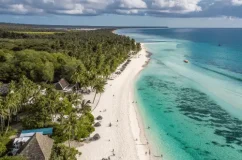
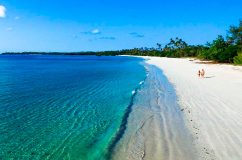
Zanzibar shines from June to October, when humidity drops and skies stay clear. December to February also works well, although afternoons feel hotter. Avoid the long rains from mid-March to May if beach time is your priority. Divers should note that visibility peaks between February and April and again in October. See our Tanzania and Zanzibar packages for combined trips from $1,762 per person.
Best Time to Visit Tanzania by Activity
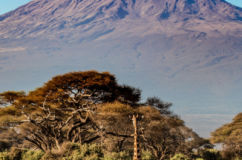
Climbing Mount Kilimanjaro
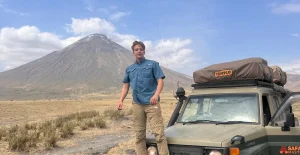
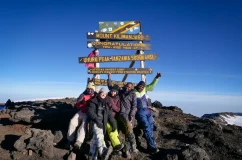
Kilimanjaro accepts climbers all year, yet two windows clearly stand out. January to early March offers clear mornings and quieter trails. June to October brings cold but very stable summit conditions. Avoid April, May, and November, because rain and mud punish summit night. Full moon dates sell out first, since many climbers want moonlit ascents. We run the Machame, Lemosho, Rongai, and Marangu routes with veteran mountain crews. Compare routes and prices on our Climbing Kilimanjaro page.
Serengeti Balloon Safari
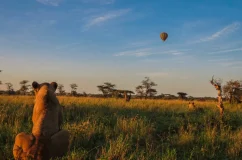
Hot air balloons lift off over the Serengeti at dawn throughout the year. Flights feel most spectacular when the herds sit directly below your basket. Therefore, June to October and January to February give the best combination of calm air and wildlife. Baskets carry limited seats and sell out weeks ahead in peak months. Reserve your place early through our Serengeti balloon safari page.
Chimpanzee Trekking
Mahale and Gombe protect some of Africa’s most habituated chimpanzee communities. Trek between July and October for dry trails and reliable sightings. October, in particular, brings chimps down to lower, easier slopes. Lake Tanganyika also reaches its warmest, clearest state for swimming then.
Birdwatching
Tanzania records more than 1,100 bird species across its habitats. The top window runs from November to April, when European and Asian migrants arrive. Breeding residents also display their brightest plumage in these months. Lake Manyara, the Ngorongoro highlands, and the Rufiji River all deliver exceptional lists.
Whale Sharks and Diving
Gentle whale sharks gather off Mafia Island from October to March. Snorkeling beside them ranks among East Africa’s great marine encounters. Elsewhere, Zanzibar and Pemba offer strong diving from February to April and October to November. Combine a dry season safari with an October marine extension for the best of both.
Cultural Visits to the Maasai and Hadzabe
Cultural tours run comfortably in every month of the year. We visit Maasai villages near the Ngorongoro highlands and Hadzabe communities at Lake Eyasi. The dry months make morning hunts with Hadzabe guides easier to join. These visits support community income directly, which sits at the heart of our Travelife-certified approach.
Best Time by Traveler Type
Families
June to August aligns with school holidays in the USA, UK, and Europe. The weather is dry, malaria risk sits at its lowest, and sightings come quickly. Short driving distances on the northern circuit help younger children stay engaged. Our family itineraries include child-friendly lodges with pools and flexible mealtimes.
Honeymooners
Couples usually want wildlife, privacy, and beach time in one trip. For that mix, we recommend June, early October, or February. Each pairs strong safari conditions with warm Zanzibar evenings. Early November adds deep discounts and near-private parks for budget-smart couples. Browse our Tanzania honeymoon safaris for lodge and beach pairings.
Photographers
February delivers calving drama, storm light, and green backdrops. August and September deliver river crossings and golden dry-season light. Serious photographers often choose the green season for its clean, dust-free air. A private vehicle matters more than the month, because positioning wins the shot.
Budget Travelers
April, May and early November can offer lower accommodation rates than busier travel periods, although savings depend on the lodge and travel dates. Park charges can also vary by park, visitor category and applicable tariff period. Compare a complete quote rather than assuming a fixed percentage saving.
Crowds and Prices Through the Year
| Period | Season Level | What to Expect |
|---|---|---|
| July to September | Peak | Highest rates, busiest parks, book 9 to 12 months out |
| Mid-December to early January | Peak (Festive) | Holiday pricing, lively lodges |
| January to February | High | Strong demand for calving and Kilimanjaro |
| June and October | Shoulder | Excellent conditions, slightly softer rates |
| November to mid-December | Low-Shoulder | Green plains, good discounts |
| April to May | Low | Deepest discounts, some camps closed |
Rates and availability based on Kilidove Tours booking patterns, Arusha, Tanzania.
What to Pack for Each Season
Pack layers for the dry season, because mornings feel cold and afternoons feel warm. A fleece, a windproof jacket, and a warm hat cover dawn game drives. In the green season, add a light rain shell and quick-dry clothing. Neutral colors work best on safari in any month. Finally, sunscreen, sunglasses, and a wide-brim hat matter year-round this close to the equator.
When Should You Book Your Tanzania Safari?
Peak season trips need 9 to 12 months of lead time. Migration river camps, balloon flights, and full moon Kilimanjaro dates sell out first. Festive season departures around Christmas need similar notice. Green season trips allow much shorter planning, sometimes just 2 to 3 months.
Kilidove Tours is a Travelife-certified operator and a winner at the 2025 World Luxury Awards. Every itinerary we build is private and fully customizable. Request a free, no-obligation quote, and our Arusha team will reply within 24 hours.
Frequently Asked Questions
What is the best time to visit Tanzania for a safari?
Late June to October is the best time to visit Tanzania for a classic safari. Dry weather pulls wildlife toward rivers and waterholes, so sightings come thick and fast.
What is the worst time to visit Tanzania?
April and May bring the heaviest rain, so most visitors avoid these months. Even so, prices reach their lowest point, and the northern parks stay open.
What is the best month to see the Great Migration?
It depends on the stage you want. Choose February for calving on the Ndutu Plains. Choose August or September for Mara River crossings.
Is Tanzania good to visit in December?
Yes, December works well, especially in the first half of the month. Short afternoon showers pass quickly, and the southern Serengeti fills with returning herds.
When is the best time to visit Tanzania and Zanzibar together?
June to October suits both the parks and the beaches. This overlap makes a combined safari and Zanzibar trip simple to plan.
How hot does Tanzania get?
Northern safari areas usually stay between 20°C and 27°C (68°F to 80°F) by day. The coast runs hotter and more humid, often reaching 32°C (90°F).
How far in advance should I book?
Book 9 to 12 months ahead for July to October or festive dates. For green season travel, 2 to 3 months is usually enough.