
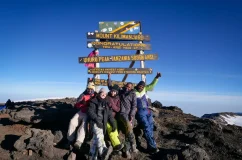
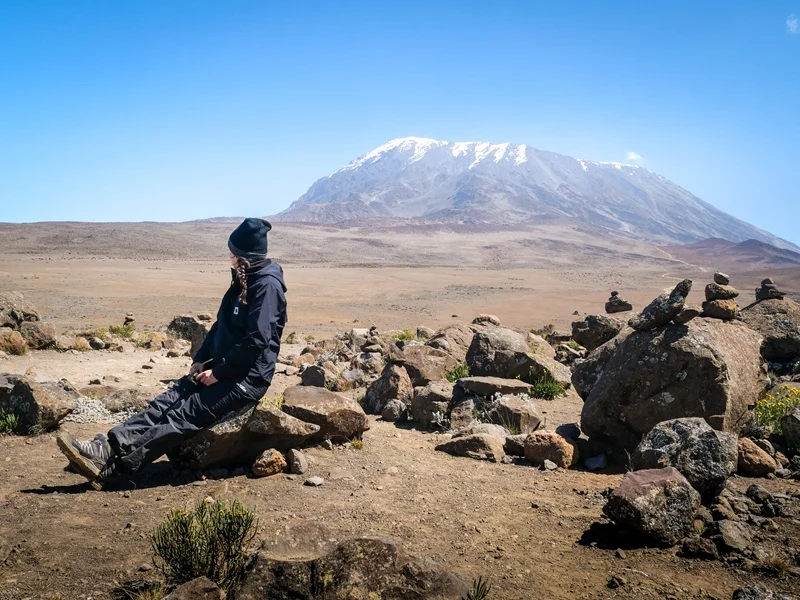
Climbing Kilimanjaro is a demanding multi-day walk at high altitude. Standard trekking routes do not usually require technical mountaineering skills, but that does not make the mountain easy. Repeated walking days, cold, uneven ground, a long summit effort and altitude all contribute to the difficulty.
What makes Kilimanjaro difficult?
| Challenge | How it affects preparation |
|---|---|
| Repeated walking days | You need endurance and enough recovery to walk again the next day. |
| Ascent and descent | Downhill walking can be tiring even after the summit effort has finished. |
| Altitude | Fitness does not prevent altitude illness; the ascent schedule and response to symptoms matter. |
| Cold, wind and rain | Test a clothing system and equipment suitable for changing conditions. |
| Sleep and routine | Camping or shared hut arrangements differ from sleeping in a hotel. |
Can a beginner climb Kilimanjaro?
A beginner to high-altitude trekking can consider a climb after appropriate preparation and an honest discussion of the demands. Begin with your current walking ability, medical history, previous altitude experience and available preparation time. “Beginner” covers very different starting points, so it cannot establish suitability on its own.
Build practical experience on hills and uneven paths with the footwear and daypack you will use. Our Kilimanjaro training guide sets out a flexible preparation framework. Seek individual clinical advice if health, medication, injury or exertion concerns apply.
Is Kilimanjaro a technical climb?
The standard trekking programmes discussed here differ from specialist rock, ice or other technical mountaineering objectives. Nevertheless, rough ground, steep sections and changing conditions require care and guide instructions. Check the exact itinerary; a general statement about the mountain does not describe every possible route or activity.
Fitness and altitude are separate questions
Being fit helps you cope with walking. It does not determine whether you will develop altitude illness. The CDC high-altitude guidance identifies the importance of ascent and acclimatisation and explains that training does not remove the risk. Discuss your itinerary and personal risk with an appropriate clinician before travel.
How difficult is summit day?
The summit stage can involve a long ascent followed by substantial descent, with cold, darkness and fatigue. Its timing, approach, overnight stops and walking demands depend on the programme. Ask for those details in writing. A turnaround or changed plan may be necessary; reaching the summit is not guaranteed.
Choosing a suitable programme
- Review each day’s walking and overnight elevation, not just the total number of days.
- Compare the preparation time you have with your current hiking routine.
- Discuss how the guide team handles symptoms, turnaround decisions and emergencies.
- Check sleeping arrangements and personal equipment requirements.
- Allow the arrival, preparation and recovery time specified in the itinerary.
Use our route comparison and packing guide alongside the actual programme. A shorter route is not automatically easier, and an additional day cannot promise a summit.
How do I discuss my own experience?
Compare Kilidove’s published climbing tours and send your hiking background, preferred dates and available mountain days through the Kilimanjaro enquiry form. Ask what the programme requires and take any individual health questions to a qualified healthcare professional.