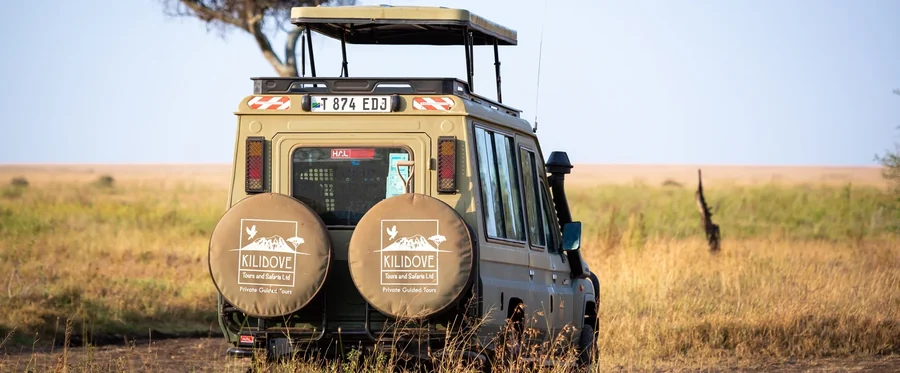
Tanzania Camping Safari
Compare Tanzania camping safari routes, campsite formats, tents, bedding, shared facilities, crew support, seasons and complete trip costs.
A FEW WAYS TO GO
FROM THE ISLAND TO THE SAFARI
Compare Tanzania camping safari routes, campsite formats, tents, bedding, shared facilities, crew support, seasons and complete trip costs.
A Tanzania camping safari combines wildlife travel with nights at campsites. Before comparing routes, check what “camping” means in each offer: a basic campsite with shared facilities is different from a permanent tented lodge with private bathrooms.
The main change from a lodge safari is how you spend the hours between wildlife outings. You return to a camp setup with its own washing, eating and sleeping arrangements. The experience can feel simple and sociable, but daily comfort depends on the equipment and support rather than the word “adventure.”
Understand how arrival at each overnight stop works. On a fully supported trip, the crew's responsibilities should be explained; on a participation-based trip, you need to know the tasks expected of guests. Neither arrangement should be assumed from a low price or a photograph of tents already standing.
Changing camps also means packing again. A route with several one-night stops can involve more repeated setup and movement than a trip staying longer in one place. Compare that rhythm with your wildlife priorities before deciding how many parks to include.
A camping safari in Tanzania should first match your available days and preferred parks. A shorter northern itinerary can concentrate on a limited combination such as Tarangire, Lake Manyara or Ngorongoro. Adding the Serengeti needs enough time for the longer journey and meaningful viewing rather than a brief arrival between transfers.
The number of nights is not the only useful comparison. Read where each night is spent, how often camp moves and which days primarily involve game viewing. A route starting in another country also needs different travel arrangements from one starting in Arusha, even when both are sold under a Tanzania camping title.
Public and special campsite arrangements can differ in facilities and booking requirements. Neither label guarantees a private bathroom, electricity or a staffed lodge setup. Ask for the named overnight sites and actual service provided at each.
Season affects ground conditions, bedding preparation and access as well as wildlife-viewing choices. A good camping plan explains weather protection and how equipment is kept usable when the camp moves. Drier months may be convenient for a route without making every dry-season campsite equally comfortable.
Costs include more than a campsite fee: vehicle and guide, park access, camp equipment, cooking support, food and other agreed services remain part of the trip. Compare the total for the same route, party size and facilities before deciding that basic camping or a permanent tented lodge is better value.
Compare the proposed route alongside the Tanzania safari overview rather than choosing only by the number of nights or the lowest headline price.
A tent provides shelter, but the mattress and bedding have a large effect on how well you rest. Check the sleeping setup as a whole: floor space for the people sharing, protection from weather, the bedding provided and a dry place for belongings. A sleeping bag supplied for another type of expedition is not automatically part of this booking.
Shared toilets and washing areas can be acceptable when you know what to expect. The important details are the actual facilities at each stop, their position relative to camp and how the crew manages movement after dark. Do not assume one campsite description applies to the whole route.
Charging and connectivity should be treated as practical limits to plan around. Keep essential equipment manageable and ask about the actual charging arrangement rather than relying on facilities you expect from a permanent lodge.
Choose it if the confirmed sleeping and washing arrangements sound comfortable enough for the people travelling. Camping is not automatically a better wildlife experience, and a lodge safari is not automatically less close to nature. Both depend on the route, guiding and viewing time.
For travellers who mainly want a proper bed and private bathroom under canvas, a permanent tented property may be the closer match. For those happy with simpler facilities, a supported camping itinerary can offer the format they want. Compare the real arrangements first, then the complete cost.
Basic camping, a mobile camp and a permanent tented lodge can offer very different accommodation. Photographs of a canvas roof do not establish the level of facilities.
A basic camping programme should explain the sleeping equipment and shared facilities. A staffed mobile arrangement needs to describe camp movement and support. A permanent tented property may function more like a lodge, with its own room and bathroom arrangements.
| Ask about | Why it changes the experience |
|---|---|
| Campsites | Actual overnight locations and facilities |
| Equipment | Tent, mattress, bedding and personal items |
| Crew | Who prepares meals and sets up camp |
| Guest participation | Tasks expected of travellers |
| Weather plan | How conditions affect camp and travel |
Trekking campsites on Kilimanjaro do not establish the same product as a wildlife camping safari. Their routes, equipment and support requirements differ.
Our Tanzania safari cost guide gives wider cost context. Compare the complete arrangements rather than assuming that a campsite fee is the price of the whole camping holiday. Park access, transport and staffing remain separate parts of the trip.
A shared departure may follow fixed dates and a set route. A private trip may allow more flexibility, subject to permits, availability and the practical demands of the journey.
Confirm the vehicle, group size and sleeping arrangements. Ask whether a single tent carries an additional charge.
Request a quotation showing park and campsite fees, transport, crew, meals and equipment. Check any personal equipment you need to bring or hire.
Follow the crew's instructions around camp, including movement after dark and keeping food stored appropriately.
No. Cost depends on the route, group size, fees and level of service. Compare full quotations.
That depends on the campsite or camp. Check each overnight stop rather than assuming the same facilities throughout.
Not automatically. Compare the actual sleeping and bathroom facilities, equipment and service rather than relying on the word tent.
Tell us which activities interest you. We’ll help you see how they fit your dates and safari route.
Free and without obligation. Or call +255 787 955 466