A Stone Town walking tour introduces you to Zanzibar’s historic streets, markets and waterfront with a guide. It is a useful way to understand the buildings around you, find your bearings and ask questions about daily life. Choose a heritage-focused walk if you want more than a quick stop for photographs.
Stone Town is the historic part of Zanzibar City on Unguja Island. Its Swahili trading heritage connects African, Arab, Indian and European influences. A good walk explains those connections through actual places, while leaving enough time to stop and look.
What the walking tour covers
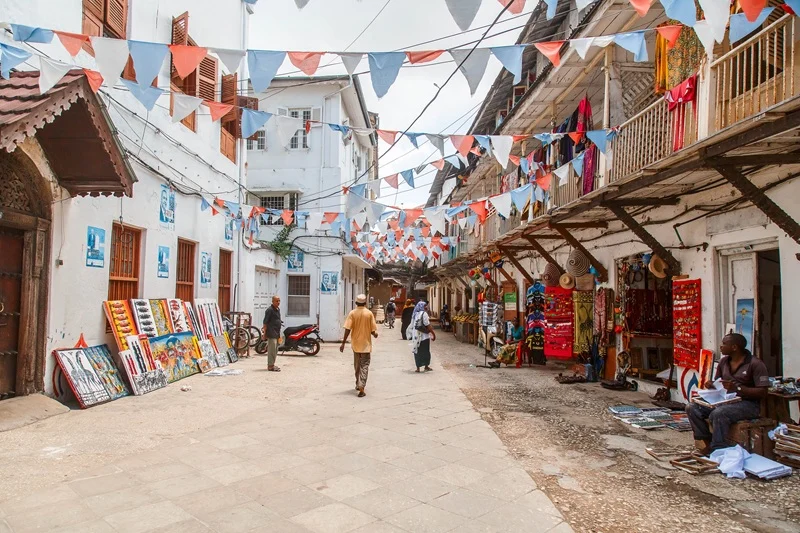
The main experience is exploring on foot with someone who can explain the town. A route can bring together trading streets, carved doorways, market activity and the seafront. The exact stops should reflect your interests and the places that are accessible that day.
For a first visit, an orientation walk helps you understand how the waterfront, commercial streets and residential lanes fit together. If you have visited before, a more focused route can spend longer on architecture or a particular historical site.
Darajani Market shows a different side of the town from the waterfront. Traders, shoppers and deliveries move through a working market, so the visit needs to fit around that activity. Ask your guide about the ingredients and goods you see rather than treating the market simply as a souvenir stop.
Around Forodhani Gardens, the relationship between the town and the sea is easier to see. The waterfront provides context for a settlement shaped by Indian Ocean trade. Between these areas, smaller streets reveal doorways, shopfronts and everyday uses of older buildings.
The route should remain considerate of residents. Keep entrances clear and ask before photographing people or the inside of a business.
Historic buildings and optional interior visits
The Old Fort, Anglican Cathedral and former slave-market area are possible points of interest. Other travelers may want to include the Old Dispensary, Hamamni baths or Freddie Mercury Museum. A short walk cannot provide an extended visit inside every building.
Passing a monument is different from entering it. Museum tickets, guide arrangements and current opening conditions need to be checked separately. Restoration or restricted access can also change a route, so a photograph outside a building should never be described as a full interior visit.
Where the route discusses the slave trade, allow time for careful explanation. The subject deserves more than a brief list of dates between sightseeing stops.
Choosing your route and pace
Decide whether your priority is a general introduction, architecture, a market visit or a particular museum. Fewer stops can give you more time for questions and a less hurried walk.
Tell the organizer about mobility needs before agreeing to the route. Narrow lanes, uneven surfaces, steps and periods of standing can affect comfort. Check the expected walking time, opportunities to rest and the distance from the final stop to your hotel or vehicle.
Meeting in Stone Town or traveling from a beach hotel
Agree on a named meeting point. “Stone Town” is an area, so it is not precise enough for meeting a guide. If your accommodation is inside the old streets, confirm whether the guide will meet you there or at a nearby accessible landmark.
For beach hotels, road transport is a separate part of the day. Check pickup, return arrangements and whether transfer time is included in the advertised duration. A short city walk can still involve a longer outing from the north or east coast.
What to wear and bring
Wear comfortable walking shoes and light clothing appropriate for a lived-in town and any religious sites on your route. Carry drinking water and sun protection. A small bag is easier to manage in narrow streets than beach luggage.
A downloaded map can help you continue exploring after the guided walk. Mark your hotel or return meeting point before setting out.
The names often describe a similar heritage visit, but compare the actual route. A city tour may include road transfers or extra stops beyond the old streets.
Yes. A guided walk adds interpretation and help with navigation. Choose independent exploring when you prefer your own pace and are comfortable finding your way.