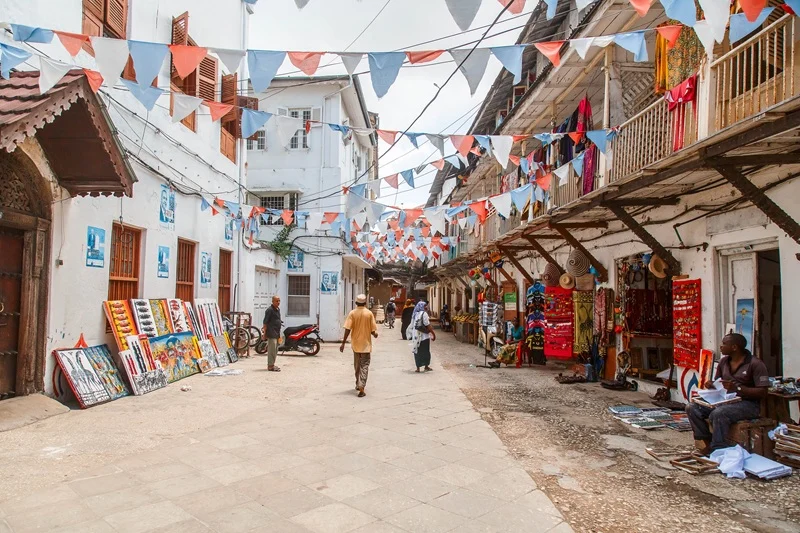
Stone Town is Zanzibar City’s historic quarter, on the western side of Unguja Island. Visit for its narrow streets, Swahili architecture, markets and waterfront. It offers a different experience from Zanzibar’s beach resorts and works well as a dedicated stop before or after time on the coast.
This Stone Town travel guide helps you decide how long to stay, what to prioritize and how to organize your visit. A short walk gives you an introduction; a longer stay leaves room for a historical site, unhurried meals and the evening waterfront.
Where Stone Town is and why visit
Stone Town forms part of modern Zanzibar City. It is not a separate island or the name of the whole archipelago. Zanzibar’s main international airport is outside the historic quarter, so arriving by air does not mean you have already seen the town.
UNESCO recognizes Stone Town for its Swahili trading-town heritage and the way its buildings and street pattern reflect connections across the Indian Ocean. Look beyond individual monuments: the relationship between shops, courtyards, lanes and the sea is part of what makes the place significant.
How much time to spend in Stone Town
Choose the amount of time around your interests rather than a checklist of every named attraction.
Time available
A practical focus
Part of a day
An orientation walk, market area and waterfront
One full day
A walk, a selected historical visit, meal break and evening plans
An overnight stay
More flexible sightseeing, early or late exploring and time between organized activities
These are planning suggestions, not fixed tour durations. Museum access, heat, walking pace and transfers affect what is comfortable.
Things to see in Stone Town
Streets, carved doors and older buildings
The carved timber doors are an accessible starting point for understanding local architecture. Ask about a specific doorway’s features rather than assuming every carving has the same meaning. Many buildings remain homes or businesses, so courtyards and entrances are not automatically public spaces.
The Old Dispensary and waterfront buildings add another perspective on the town’s commercial history. Viewing an exterior can still be worthwhile when interior access is restricted.
Historical and religious sites
The Old Fort, Anglican Cathedral and former slave-market area help explain different periods of the town’s history. Choose one or two sites for a closer visit instead of rushing between names. Confirm opening conditions and any admission charges before committing your schedule.
The House of Wonders is a prominent landmark, but do not build your day around entering it without a current access check. The same approach applies to other buildings undergoing restoration.
Darajani Market and Forodhani Gardens
Darajani is a working market where the experience depends on the time and the activity taking place. Forodhani Gardens provides waterfront space and an evening food-market setting. They serve different purposes, so visiting one does not replace the other.
A practical one-day visit plan
Start with the town’s layout. Walk between the waterfront and the market streets, either independently or on a Stone Town Walking Tour. This makes later exploring easier.
Choose a historical site for a longer visit, with a break for lunch and shade rather than continuous walking through the hottest part of the day. Leave the afternoon flexible for a museum, shops or another neighborhood of the old town.
If you stay into the evening, spend time at the waterfront or arrange a food-focused outing. Check your return transport before settling in for dinner, especially when your hotel is elsewhere on the island.
Getting to Stone Town and moving around
Arrange your transfer around your actual arrival point: airport, ferry terminal or beach hotel. Confirm the pickup point and the time you need to arrive, rather than relying on a generic island-wide drive estimate.
Walking is the practical way to explore many of the narrower historic streets. Vehicle access varies, which matters if you have luggage or limited mobility. Ask your accommodation where a driver can stop and how far you will need to walk.
An offline map and a saved hotel location are useful. Leave enough time to retrace your route instead of scheduling a transfer immediately after an unfamiliar walking circuit.
Staying in Stone Town or visiting from the beach
A Stone Town stay suits travelers who want the town close at hand for meals and sightseeing. Check the accommodation’s street access, steps and room location before booking. Historic-building character does not automatically mean easy access or a quiet room.
A beach base can work for a day visit, but the road journey reduces your time in town. Compare that journey with your arrival or departure plans. For the wider coast, see our Best Beaches in Zanzibar guide.
Food, markets and evening plans
Food provides another way to understand the island’s trading connections. A tasting walk can introduce dishes and vendors, while a restaurant meal gives you a different pace. For a food-led visit, use the Stone Town Food Tour page.
An evening tour focuses on the town after dark. It should not be treated as a substitute for daytime entry to museums or historical buildings.
Practical tips for your visit
Wear comfortable footwear and clothing that respects the town’s local setting. Carry water, protect yourself from the sun and ask before photographing people. Be considerate when a street is being used for deliveries, trade or access to homes.
Agree prices and what a service includes before accepting it. Check current payment arrangements with your hotel or tour organizer; an older travel blog is not a reliable guide to today’s currency or payment rules.
Day trips from Stone Town
Prison Island offers a boat outing to Changuu, while Nakupenda is a tidal sandbank experience. A spice-farm visit takes you inland. These trips add travel and activity time, so avoid assuming they all fit into a brief city visit.
Chumbe Island is a separately managed reserve. Check day-visit acceptance and boat arrangements before adding it to a fixed itinerary.