Tanzania

Safari country, mountain trails and places worth knowing.

Zanzibar

Island stays, local experiences and safaris to the mainland.

Lake Natron travel guide

Lake Natron is a shallow, alkaline lake in northern Tanzania near the Kenyan border. Visitors usually explore the area from Engaresero, with guided lakeshore walks, birdwatching and outings into the surrounding volcanic landscape. Ol Doinyo Lengai rises nearby, but climbing it is a separate and demanding activity.

Include Natron because you want these experiences and have time for the journey. The lake’s water level, color and bird concentrations vary, and access can involve long stretches on rough roads. A thoughtful overnight plan is more useful than adding it as a quick stop between distant safari camps.

Visiting Lake Natron in Tanzania

Lake Natron suits travelers interested in walking, birds, geology and the landscape beyond the main game-drive parks. Its appeal is different from a full day looking for large mammals in a national park. Wildlife may be present in the wider area, but game viewing should not be the main reason to allocate time here.

Planning decisionWhat matters
Main baseThe Engaresero area and your selected accommodation
Main activitiesGuided shore visits, birdwatching, waterfall walks and locally arranged excursions
Overnight allowanceEnough time for arrival, activities and the onward journey
Main practical challengesHeat, uneven ground, road conditions and remote transfers
Important expectationNeither red water nor close flamingo views can be guaranteed

If your trip is short and big-game viewing is the priority, compare the extra driving with the time it takes away from the parks. Natron is often a better choice for an itinerary with some flexibility than one already moving accommodation every night.

Where is Lake Natron, and how do you reach it?

Lake Natron lies in the eastern Rift Valley, northeast of the Ngorongoro area and north of the Lake Manyara corridor. Engaresero is a practical reference point for many visitor arrangements near the southern lake area. Your final meeting point or camp still matters: arriving in the area is not the same as being ready to start a walk.

From Arusha and the Lake Manyara corridor

A common road approach runs from Arusha toward Mto wa Mbu, then through the Engaruka area toward Natron. Plan the drive using the current road conditions and the exact accommodation address. Rough surfaces, rain and stops can make the journey take longer than a simple distance calculation suggests.

Ask whether the quoted transfer is private, which vehicle is proposed and when you should expect to arrive. Build in time for food, water and rest before an activity. If you intend to drive yourself, confirm the current route and vehicle requirements with your accommodation; an old online route description is not a current road report.

Linking Natron with the Serengeti or Ngorongoro

Natron can be part of a northern safari circuit, but the right connection depends on your Serengeti camp, selected entrance or exit, seasonal access and the next overnight stop. Do not assume that every Serengeti location offers the same transfer, or that a short distance on a map means an easy drive.

Review the whole route before adding the detour. Explore our Tanzania safari options, then discuss whether a Natron stay fits your dates and chosen accommodation. Leave a sensible buffer before an international flight rather than placing it immediately after a remote road transfer.

Things to do at Lake Natron

Choose the activities individually. A shore walk, a rocky waterfall route and a volcano ascent involve different effort, equipment and conditions. Booking accommodation near all three does not automatically mean all three are included or suitable.

Flamingo viewing and guided shore walks

Lake Natron is an important breeding habitat for lesser flamingos. For a visitor, the practical experience is usually observing birds from an appropriate shore location with local guidance. The birds may be distant, so binoculars and a longer camera lens are more useful than trying to get closer.

The accessible shoreline changes with water levels and ground conditions. Follow your guide’s route, keep away from sensitive nesting areas and avoid any approach that makes birds move away. A birdwatching outing is not permission to enter a breeding colony.

Early or later outings may fit the heat and your other activities better, but agree the actual time locally. Explain how far you are comfortable walking and whether you need a shorter option. Views, bird numbers and the condition of the salt flats are all variable.

Engare Sero waterfall walk

The waterfall route explores a different environment from the open lakeshore. It follows a watercourse through rocky gorge terrain, where footing and water levels matter. Ask about the current route, any water crossings and the expected walking effort before committing.

Wear footwear suitable for wet, uneven ground and take only what you can carry comfortably. A guide should assess conditions on the day; rain or changing flow can alter what is sensible. Do not treat a waterfall photograph as a promise that a particular route, pool or swimming opportunity will be available.

Engaresero, local visits and footprint sites

Locally arranged visits can add context to the lake area. If you want to meet residents or visit a cultural site, agree the arrangements through a guide and ask what is appropriate to photograph. Community visits should involve consent, clear payments and respect for people’s daily work.

The area also has preserved human footprint sites associated with its volcanic landscape. Ask whether a site visit is currently available and how it fits into your route. Follow the site custodian’s instructions, stay within permitted areas and do not touch or walk on preserved traces.

Ol Doinyo Lengai as a separate climb

Ol Doinyo Lengai is an active volcano and an important feature of the Natron landscape. Enjoying views of it and climbing it are very different plans. The ascent and descent require a specific assessment of fitness, preparation, guiding and current access conditions.

Read our Ol Doinyo Lengai climb guide before choosing the climb. Allow time for rest afterward and reconsider an ambitious onward drive on the same day. You do not need to climb the volcano to make a Lake Natron stay worthwhile.

Best time to visit Lake Natron

Choose your dates around the complete journey, not a single promise about red water or flamingos. June to October is the usual dry-season planning window. June to August can be more comfortable for outdoor activities, although Natron remains warm. A dry-season date does not guarantee easy roads. Confirm current access conditions, especially after rain, which can change the approach, water levels and walking conditions.

Flamingo movements and breeding depend on environmental conditions. Online guides give different fixed “peak” months, but a month alone cannot tell you how close birds will be to an accessible shore. Ask for a recent local report if birdwatching is the main purpose of your stay.

The lake’s color also varies. The red or pink tones associated with salt-loving microorganisms do not cover the whole lake at all times, and the view from ground level can differ considerably from an aerial photograph. Plan to appreciate the landscape you find rather than expecting one exact image.

For a wider itinerary, use our best time to visit Tanzania guide alongside local advice for Natron. A season that works for one park or activity may involve a different compromise here.

How many nights should you spend?

Two nights are a useful starting point when you want time to explore without placing every activity between two transfers. One night can work on the right route, but it leaves less flexibility if the arrival is delayed or an outing needs to move because of conditions.

Stay lengthWhen it may work
One nightA carefully timed route with a limited activity plan
Two nightsTime for arrival, a full local day and onward travel
Three nights or moreA slower stay, additional walks, birding or a separately planned climb

A possible two-night plan is to arrive with time to settle in, choose a suitable short outing if conditions allow, then use the following day for a shore visit and another agreed activity. Continue after the second night. This is an example of how to allocate time, not a fixed itinerary or an inclusion list.

If you add Lengai, rebuild the schedule around the climb and recovery. Do not simply insert it into the hours that were intended for sleep.

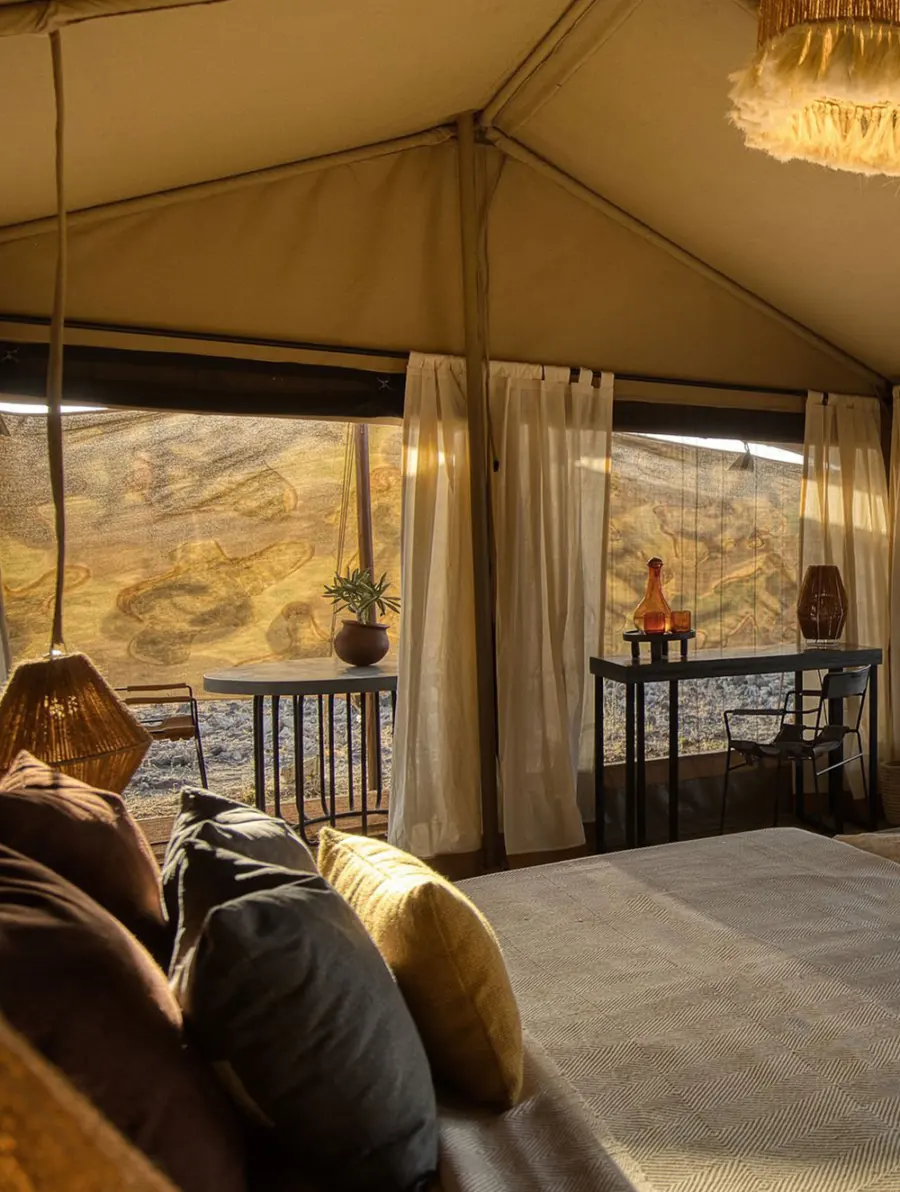
Tent interior at Lake Natron Camp
Tent interior at Lake Natron Camp.

Where to stay around Lake Natron

Start by comparing the location of each camp with your planned meeting points and onward route. A property in the wider Natron area may still require a drive to a particular activity. The last transfer can matter as much as the broad accommodation category.

Lake Natron Camp is one option to review. Use its individual page for accommodation details and confirm availability for your dates. Do not assume all camps share the same facilities, activity arrangements or level of access.

Ask about meals, drinking water, cooling or shade, power and charging, bathrooms and how local outings are organized. If you are traveling with children or need a particular level of physical access, confirm the exact room and transfer arrangements before reserving.

Fees, guiding and the total trip cost

A Natron visit can involve several cost components: the vehicle and driver, accommodation, meals, area or community charges, local guiding and separately booked activities. The amount depends on the route, dates, traveler category and what you choose to do.

Request an itemized quote rather than relying on one admission figure copied from an older article. It should show which charges are included, what remains payable locally and how repeat outings or additional nights affect the total. Confirm the payment arrangements before leaving a larger town.

A volcano climb or special excursion should be listed clearly if you want it included. Comparing two quotations is easier when both describe the same nights, transfers, meals and activities.

What to pack and check before departure

Take sun protection, a hat, suitable walking shoes, comfortable clothing and enough drinking water for each outing. Binoculars help with distant birds. For the waterfall route, ask specifically about footwear and keeping valuables dry; for Lengai, use the separate climb equipment guidance.

Confirm pickup details, the next destination and a contact plan before the drive. Ask your accommodation about current phone coverage, charging and payment facilities rather than relying on them being available throughout the journey.

Lake Natron is not a swimming destination. Follow local guidance on where to walk and avoid entering the lake. Our separate Lake Natron swimming and safety article addresses the water-related questions in more detail.

Lake Natron travel guide FAQs

It can be, especially if you want guided walks, flamingo viewing and volcanic scenery and have time for the transfer. If your priority is maximum game-drive time during a short trip, compare that benefit with the extra journey before adding another stop.

No. Color varies with conditions and viewing position. A ground-level visit may show pale water, salt flats or different patches of color rather than the uniformly red surface seen in some aerial images.

No. Natron is important flamingo habitat, but numbers, location and viewing distance vary. Ask about current conditions and take binoculars; never approach a sensitive breeding area to improve a photograph.

Yes. Shore visits, birdwatching, suitable walks and locally arranged excursions can form a stay without a Lengai ascent. Choose those activities when planning rather than assuming the climb is the main event.

It depends on the children, weather, accommodation and activities. Discuss heat, walking distances, rocky terrain and water crossings before booking. A tailored short outing may be more suitable than a full waterfall route or a demanding walking schedule.

The adventure begins

Plan your Tanzania safari

Send your travel dates, number of travelers and preferred parks. Our team will help compare Tanzania safari routes and prepare a proposal for your trip.

Free and without obligation. Or call +255 787 955 466

Kilidove safari vehicle standing in open grassland